 Listicle
Best Ways to Market Indianapolis Homes in 2026
Table of Contents
- Why Indianapolis Home Marketing Looks Different in 2026
- How to Price a Home in Indianapolis Before You Market It
- Real Estate Photography Tips for Sellers: The Asset That Drives Listing Views
- Home Staging Tips Before Selling That Hold Up on Camera and in Person
- Where to Promote Your Listing: Portals, Social Media, and Digital Advertising
- Building a Real Estate Marketing Plan for Sellers, Step by Step
- Marketing Budget and Channel-by-Channel Costs
- Measuring Campaign Performance and Knowing When to Adjust
- Frequently Asked Questions
Last Updated: October 19, 2026
Why Indianapolis Home Marketing Looks Different in 2026
Home marketing in central Indiana no longer follows the old playbook of a sign in the yard and a weekend open house. Inventory has loosened across many Indianapolis neighborhoods, buyers shop on their phones before they ever request a showing, and listings that look ordinary online simply sit. At Brooke Newport, Realtor, we have watched local cycles, and the pattern in 2026 is clear: presentation and promotion decide who gets showings and who gets silence.
The best ways to market Indianapolis homes in 2026 combine sharp pricing, professional visual assets, and a deliberate plan for where a listing appears. Below, we break down each tactic, what it costs, and how to measure whether it works.
How to Price a Home in Indianapolis Before You Market It
Pricing comes first because marketing cannot rescue an overpriced listing. A pricing strategy built on closed comparables from the last 60 to 90 days, adjusted for condition and neighborhood, sets the ceiling for every other tactic on this list.
Start with three numbers: recent closed sales within a mile, active competition your buyer will tour instead, and your days-on-market target. If you need to sell quickly, price at or slightly below the strongest comparable. If you can wait, price at market and hold. Price cuts later in the listing cycle cost more than a sharp launch price, because buyers who watched the reduction assume something is wrong.
A common mistake is pricing from the tax assessment or an online estimate. Neither reflects what Indianapolis buyers are paying this month in your specific neighborhood.
Real Estate Photography Tips for Sellers: The Asset That Drives Listing Views
Real estate photography tips for sellers start with one rule: the first photo decides whether anyone sees the rest. Most buyers scroll listing portals on a phone, so your lead image must read clearly at thumbnail size.
- Shoot at eye level with the widest lens your photographer carries, and avoid shooting into dark corners
- Turn on every light and open every blind before the camera arrives
- Clear cars from the driveway and counters from the kitchen
- Shoot at midday when the front of the house faces the sun
- Add a short video walkthrough or virtual tour so out-of-state buyers can pre-qualify the home
Professional photography and video are the highest-use spend in home marketing. A dim, cluttered photo set wastes every dollar you put into promotion afterward.
Home Staging Tips Before Selling That Hold Up on Camera and in Person
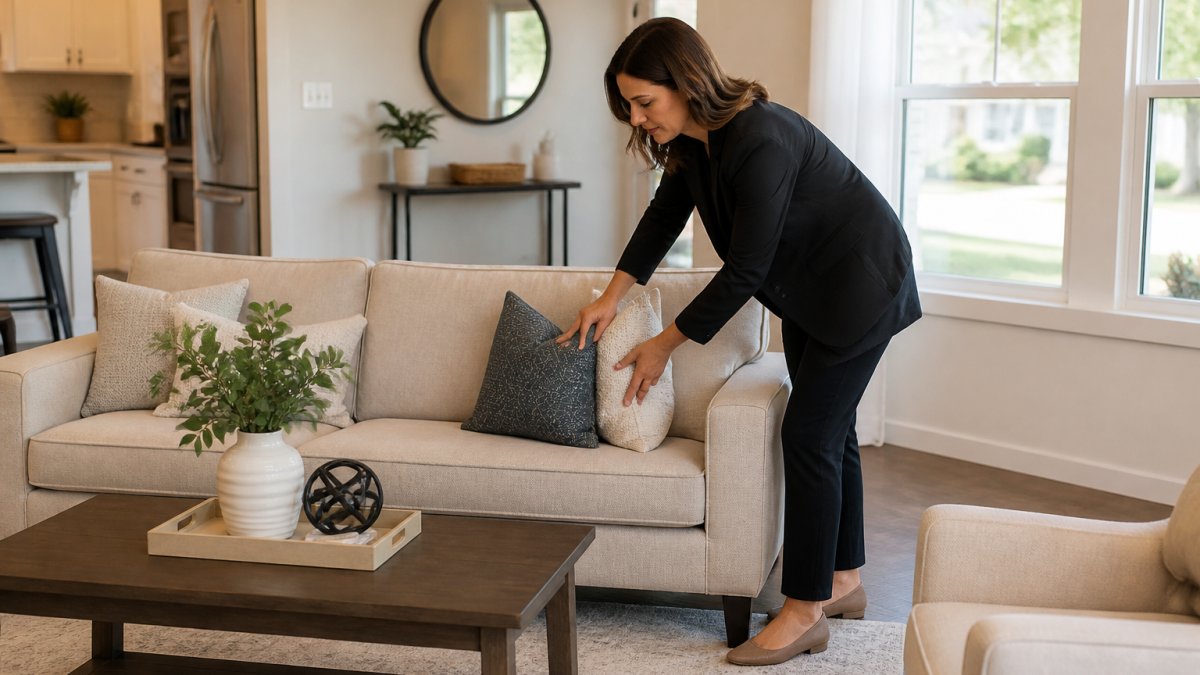
Home staging tips before selling work best when they serve two audiences at once: the camera and the buyer standing in the doorway. Neutral furniture, warm lighting, and cleared surfaces photograph well and help buyers picture themselves living there.
Focus on the rooms buyers judge fastest: the entry, kitchen, primary bath, and main living space. Remove personal photos, declutter closets, and fix the small things a camera magnifies, like scuffed baseboards and dated light fixtures. Small property upgrades such as fresh paint and updated hardware often return more than larger renovations.
Where to Promote Your Listing: Portals, Social Media, and Digital Advertising
Online marketing now carries most of the weight in home listing promotion. Your property listing should appear on the major listing portals buyers actually use, with complete listing details, accurate square footage, and every photo in the gallery.
Social media promotion extends reach beyond the portals. Local marketing on neighborhood Facebook groups, Instagram, and community pages puts your home in front of prospective buyers who already want that area. Digital advertising, including targeted ads on social platforms and search, keeps the listing visible to people actively browsing homes in your price band.
For-sale signs and open houses still matter, but they work as reinforcement. A sign confirms the home is available; an open house creates a deadline. Neither replaces a strong online presence.
Building a Real Estate Marketing Plan for Sellers, Step by Step
A real estate marketing plan for sellers turns the tactics above into a dated sequence with owners, deliverables, and checkpoints. Here is the plan we walk sellers through before launch, built for how buyers in this market actually shop.
| Step | Timing | Action | Owner | Checkpoint |
|---|---|---|---|---|
| 1 | 4 weeks out | Pricing analysis from 60-90 day closed comps, repair list, staging consultation | Agent + seller | Agreed list price and repair budget |
| 2 | 3 weeks out | Complete repairs, declutter, order any staging furniture | Seller | Walkthrough sign-off |
| 3 | 2 weeks out | Professional photos, video walkthrough, floor plan, twilight set | Agent | Photo set approved before any promotion |
| 4 | 10 days out | Write property description for the likely buyer; prep portal assets and sign | Agent | Description reviewed against neighborhood buyer profile |
| 5 | 7 days out | Build digital ad audiences and social posts; schedule open house | Agent | Ad creative and audience approved |
| 6 | Launch day | Go live on portals, social, digital ads, and sign | Agent | Listing live and verified on all channels |
| 7 | Week 1 | First open house; A/B test lead photo and headline | Agent | Compare click-through and inquiry volume |
| 8 | Weekly | Review views, inquiries, showings, and days on market; adjust price or assets | Agent + seller | Written weekly report |
Neighborhood-level buyer targeting belongs in step 4. Write the property description for the buyer most likely to want that block: school district, commute, walkability, and nearby amenities. A listing in Hamilton County reads differently than one near downtown Indianapolis, and the copy should reflect that. Pair the description with the ad audience, for example, target buyers searching in the same school district or within a set commute radius rather than a broad metro radius.
Launch timing is a lever, not a detail. List on a Thursday or Friday so the first weekend open house captures the initial wave of portal alerts. Avoid launching the week of a major holiday, when portal traffic drops. If your home competes with several similar listings on the same street, launch after the strongest competitor goes under contract so your listing becomes the freshest option in its price band.
A/B testing belongs in the first two weeks, when the listing has the most attention. Swap the lead photo, rewrite the headline, or adjust the first line of the description, then compare click-through and inquiry volume over a set window, usually seven days. Keep the version that wins and stop testing once the listing is under contract.
Marketing Budget and Channel-by-Channel Costs
Costs vary by property, timeline, and how much preparation the home needs, so there is no single figure that fits every seller. Below is how we allocate each line item, what it typically buys, and the trade-off to weigh before you sign.
| Channel | Typical spend range | What it buys | Trade-off |
|---|---|---|---|
| Professional photography | $300-$600 | 25-40 edited stills, twilight set, floor plan | Highest return per dollar; skip only if photos are already less than 12 months old and the home has not changed |
| Video walkthrough or virtual tour | $200-$500 | 60-90 second walkthrough, 3D tour link for out-of-state buyers | Strong for relocations and higher price points; less impactful under $300,000 |
| Staging (occupied home) | $500-$2,500 | Consultation, furniture rental, decluttering, accessory refresh | Best return in vacant or dated homes; occupied homes often need only a consultation |
| Digital advertising | $300-$1,000 per month | Targeted social and search ads to buyers in your price band and neighborhood | Cap the monthly spend and review weekly; broad boosts waste budget |
| Print and open house materials | $100-$300 | Flyers, sign riders, refreshments, directional signs | Modest line item; useful for driving weekend traffic, not for reach |
| Listing portal upgrades | $0-$500 | Featured placement on some portals | Test one portal at a time; measure inquiries before renewing |
Three rules keep the budget honest. First, fund photography and staging before any paid promotion, a weak photo set wastes ad dollars. Second, set a monthly cap on digital advertising and review cost per inquiry weekly, not monthly. Third, ask for a written line-item breakdown before you sign so you can see what is included and what is billed separately.
The order of spending matters as much as the amount.
Measuring Campaign Performance and Knowing When to Adjust
Measuring campaign performance separates a marketed listing from a listed one. Track listing views, inquiries, showings, and days on market weekly, and compare them against what similar homes in your area generate.
If views are high but showings are low, the photos are working and the price or description is not. If views are low, the lead image or portal placement needs attention. A/B testing listing assets, such as swapping the lead photo or rewriting the headline, tells you which version draws more buyer engagement.
Frequently Asked Questions
What are the best ways to market a home in Indianapolis?
Start with accurate pricing based on recent comparable sales, then invest in professional photography and video, since listing views and inquiries depend heavily on the first image a buyer sees. Add a staged presentation, promote the listing across portals and social media, and target buyers by neighborhood. A written marketing plan with a launch timeline and a way to measure showings and inquiries keeps the campaign accountable instead of relying on a for-sale sign and hope.
How important are professional photos when marketing a home?
Photos are the first filter buyers apply. Most prospective buyers scroll listing portals on a phone, and a dim or cluttered lead image gets skipped before anyone reads the property description. Professional photography tips for sellers usually come down to preparation: declutter surfaces, open blinds, turn on lamps, and shoot in daylight. Video walkthroughs and virtual tours extend that same first impression to out-of-state buyers who cannot attend an open house.
Is Indianapolis a buyer's or seller's market right now?
It shifts by neighborhood and price band, so treat any single label with caution. Inventory levels, days on market, and how often homes sell at or above list price tell you more than a headline. Ask for a breakdown of your specific area and price point: median sale price, average days on market, and the share of listings that needed a price cut. That data shapes whether you market aggressively at launch or plan for negotiation room.
How much should I budget to market my Indianapolis home?
Costs vary by property, timeline, and how much preparation the home needs, so there is no single figure that fits every seller. Ask for an itemized breakdown before you commit, and compare it against the expected effect on days on market and final sale price rather than treating marketing as a flat expense.
Selling a home in central Indiana takes more than a listing and a sign, and the sellers who get the strongest offers are the ones who plan the marketing before the home goes live. If you want a partner who knows these neighborhoods and will build that plan with you, contact Brooke Newport, Realtor today. With 25 years of local experience, personalized guidance, and a marketing approach built around your specific property goals, we will help you move from listing to closing with confidence.