 How-to
Hidden Costs of Buying a Home: A First-Time Buyer's Guide
Table of Contents
- Understanding the Hidden Costs of Buying a Home
- Home Inspection Costs and Why They Matter
- Closing Costs When Buying a House Explained
- Home Maintenance and Repair Costs Before and After Purchase
- Property Taxes, Insurance, and Annual Ownership Expenses
- First-Time Homebuyer Budget Checklist
- Strategies to Prepare for and Reduce Hidden Costs
- Conclusion
- Frequently Asked Questions
Last Updated: October 18, 2026
Understanding the Hidden Costs of Buying a Home
The sticker price is just the beginning. Most first-time buyers focus on the down payment and mortgage, then get blindsided by expenses they never saw coming.
The hidden costs of buying a home fall into three categories: one-time closing costs, immediate post-purchase expenses, and ongoing annual ownership costs.
Your down payment might be 20% of the price, but total cash to close often runs 3-6% higher, and monthly expenses climb beyond the mortgage payment.
Here's what we'll cover:
- One-time costs due at closing
- Ongoing annual expenses
- Strategies to estimate and reduce these costs
Home Inspection Costs and Why They Matter
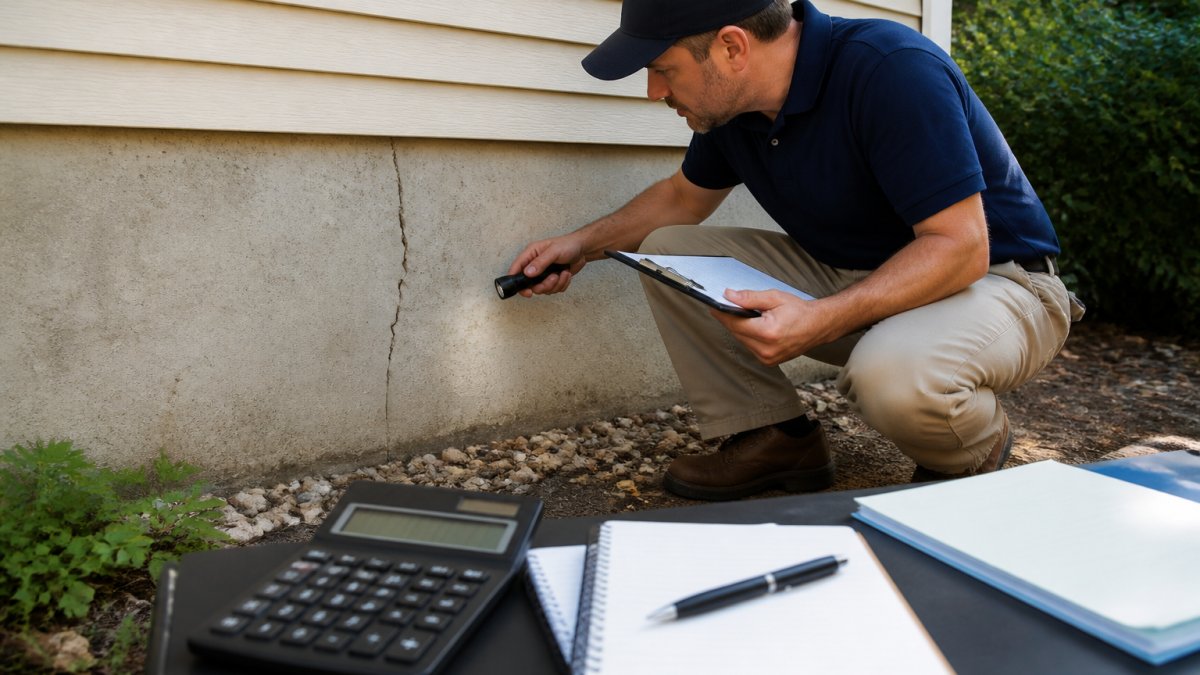
Many buyers skip inspections to save money upfront, a costly mistake.
The fee is non-refundable, but consider it insurance: discovering a $15,000 roof replacement before you buy beats discovering it six months after closing.
What the inspection covers:
- Foundation and structural integrity
- Roof condition and remaining life
- Plumbing and water systems
After the inspection, you may negotiate repairs with the seller, some fix items themselves, others offer closing credits.
Closing Costs When Buying a House Explained
Closing costs are fees due when ownership transfers, commonly 2-5% of the purchase price, roughly $6,000 to $15,000 on a $300,000 home. Timing matters as much as the total: some costs come before a signed contract, some during due diligence, some at the closing table. Knowing which is which prevents spending your closing-cost reserve on inspections or assuming a fee is refundable when it is not.
Stage-by-stage: when each closing cost is actually due
Before you make an offer (out of pocket, non-refundable):
- Pre-approval application fees, if any (many lenders waive these; ask).
- Credit report fees, often $30-$75 per borrower.
- Earnest money deposit, typically 1-3% of the purchase price, submitted with the offer and held in escrow. It is credited toward your purchase at closing but is at risk if you walk away outside your contingencies.
During due diligence (out of pocket, non-refundable):
- Home inspection: commonly $300-$500, more for larger or older homes and for specialty inspections (sewer scope, radon, mold, structural engineer).
- Appraisal: commonly $400-$600, ordered by the lender after contract.
- Title search: commonly $150-$300.
At closing (paid from the closing table, often financed into the loan or covered by seller credits):
- Loan origination fee, commonly 0.5-1% of the loan amount.
- Processing and underwriting fees, commonly $300-$900 combined.
- Title insurance: lender's policy commonly $500-$1,000; owner's policy priced separately and often negotiable as to who pays.
The two documents that control the number
Federal law requires a Loan Estimate within three business days of application and a Closing Disclosure at least three business days before closing. Compare them line by line: origination charges, transfer taxes, and lender-selected services are subject to tolerance limits; fees you shop for yourself are not. If a fee moved without your authorization, ask the lender to explain in writing before you sign.
Negotiation levers that actually move the number
- Shop the lender, not just the rate. Compare Loan Estimates from at least three lenders on the same day, loan amount, and lock period; origination and processing fees vary widely for identical loans.
- Ask for seller credits. In buyer-friendly markets, sellers commonly agree to cover some closing costs in exchange for a slightly higher purchase price. Your lender will cap seller credits as a percentage of the loan, so confirm the cap before negotiating.
- Negotiate who pays for title insurance. In many states the seller customarily pays for the owner's policy; in others the buyer does. It is often negotiable in the contract even where custom points one way.
A worked example
On a $300,000 purchase with 10% down, a buyer might see: $3,000 earnest money (credited at closing), $450 inspection, $500 appraisal, $250 title search, $1,200 origination, $700 processing and underwriting, $800 lender's title policy, $400 owner's title policy, $250 recording, $1,400 prepaid insurance, and $900 prepaid taxes, roughly $6,850 beyond the down payment. A $3,000 seller credit drops that to about $3,850, the number to have in the bank, not the 2-5% rule of thumb.
Home Maintenance and Repair Costs Before and After Purchase
Home maintenance and repair costs begin the moment you close, sometimes sooner, if the inspection revealed issues.
Immediate post-purchase repairs might include a roof leak, a failing water heater, or electrical code violations.
Ongoing annual maintenance keeps systems running and prevents expensive failures:
- HVAC servicing: $150-$300 per year
- Roof inspection and minor repairs: $200-$500 annually
- Plumbing and drain cleaning: $150-$400 per year
Many homeowners set aside 1% of the purchase price annually for maintenance, $3,000 on a $300,000 home, to cover failures like a water heater or roof patch.
Property Taxes, Insurance, and Annual Ownership Expenses
Property taxes, homeowners insurance, and HOA dues are the three recurring costs most likely to change after you close, and the three most often treated as fixed. Budget each as a range that can move at renewal, reassessment, or annual meeting.
Property taxes: the assessment lag problem
Property taxes commonly run an effective rate of roughly 0.5% to 2.5% of assessed value, but assessed value is not your purchase price.
Your first full tax year can be higher than the seller's last. If the seller paid $3,000 on an assessed value of $250,000 and you buy at $320,000, reassessment at the same millage produces roughly $3,840, an $840 jump absent from the seller's disclosure.
How to verify before you make an offer:
- Pull the property's current assessed value and tax bill from the county assessor's public record.
- Ask the assessor's office (or your agent) whether a sale triggers reassessment and on what schedule.
- Recalculate the tax at your offer price using the current millage or effective rate, not the seller's bill.
Homeowners insurance: renewal is not a formality
Insurance is mandatory with a mortgage, commonly $800 to $2,000+ annually, varying by construction, roof age, claims history, and catastrophe exposure. What matters is the renewal 12 months later: insurers reprice on reconstruction cost inflation, regional loss trends, and your property's risk profile.
Three mechanics drive most of the change:
- Replacement cost inflation. Dwelling coverage limits are tied to rebuild cost, which tracks construction materials and labor, not the home's market price.
- Roof age and condition. Many carriers apply surcharges or actual-cash-value settlement as a roof ages; a roof with a few years left can be repriced sharply.
- Catastrophe and wildfire exposure. Properties in hail, hurricane, or wildfire zones can see larger renewal increases, and some carriers withdraw from a region entirely, forcing a switch to a state residual market insurer at higher cost.
Before you close, get quotes from at least three carriers using the actual address, roof age, and claims history, and ask how the premium would change if the roof were replaced.
HOA dues: read the budget, not just the number
The monthly HOA figure in the listing is a snapshot. Dues can rise annually, and special assessments can arrive when reserves are underfunded. Before waiving any HOA contingency, request and read:
- The current budget and reserve study, if one exists.
- Two years of meeting minutes for deferred maintenance, litigation, or special assessments.
- Governing documents for the cap on dues increases and the association's authority to levy special assessments.
A reserve study showing funding below the recommended level is a signal that a special assessment is more likely, not less. That is a negotiation lever, not just a warning sign.
Utilities and services: estimate from the property, not the average
Utility costs depend on climate, square footage, insulation, window age, and HVAC and water heater efficiency. Skip national averages: ask the seller for 12 months of bills and use the highest winter and summer months as your planning number. Water, sewer, trash, and internet are often separate line items.
Putting the recurring costs together
A $300,000 home might carry $4,500 in year-one property taxes, $1,500 in insurance, $2,400 in HOA dues, and $3,000 in maintenance reserves, about $11,400 before utilities. If taxes reassess 15% higher, insurance renews 12% higher, and HOA dues rise 5%, year two adds roughly $1,100 with no lifestyle change. Stress-test your budget against that number.
First-Time Homebuyer Budget Checklist
Use this checklist to track all costs from offer to closing and beyond, and bring it to your agent and lender so everyone understands your budget.
| Cost Category | Estimated Amount | Actual Amount | Notes |
|---|---|---|---|
| Down payment | Usually 3-20% of purchase price | ||
| Home inspection | $300-$500 | Non-refundable | |
| Appraisal | $400-$600 | Required by lender | |
| Title search and insurance | $650-$1,300 | Protects ownership | |
| Lender fees (origination, processing, underwriting) | $1,000-$3,000 | Varies by lender and loan size | |
| Property taxes (prepaid at closing) | Typically 2-3 months | ||
| Homeowners insurance (first year) | $800-$2,000 | Prepaid at closing | |
| Attorney fees | $300-$1,000 | Varies by state and complexity | |
| Recording and transfer fees | $100-$300 | Varies by county | |
| Total Cash to Close | Down payment + all closing costs | ||
| Year 1 maintenance reserve | $3,000+ | 1% of purchase price minimum | |
| Year 1 property taxes | Check local tax assessor | ||
| Year 1 homeowners insurance | Check insurance quotes | ||
| Year 1 utilities and services | Estimate based on home size |
Before you make an offer, work through this checklist with your lender. Get written estimates for closing costs. Know your total cash to close before you commit.
Strategies to Prepare for and Reduce Hidden Costs
Get multiple inspection quotes. Prices vary beyond the typical $300-$500. Call three inspectors and choose on reputation, not just price.
Review the title report carefully. If you see liens, unpaid taxes, or other issues, address them before you sign, far easier than fixing them after.
Budget for repairs found in inspection. Don't assume the seller will fix everything.
Understand your escrow account. Your lender collects taxes and insurance monthly with your mortgage payment. Ask how much goes into escrow each month and why.
Conclusion
The hidden costs of buying a home extend far beyond the down payment and mortgage payment. Between inspections, closing costs, taxes, insurance, and maintenance, your total investment can easily exceed 10% of the purchase price in the first year alone. At Brooke Newport, Realtor, we help you understand every expense upfront so you can budget confidently. With 25 years of experience in central Indiana real estate, Brooke has guided first-time buyers through this process.
Frequently Asked Questions
What are the most commonly overlooked hidden costs of buying a home?
First-time buyers often forget about appraisal fees, title insurance, prepaid property taxes held in escrow, and homeowners insurance premiums due at closing. Many also underestimate home maintenance reserves and HOA fees. These expenses can add $5,000 to $15,000 or more to your cash to close. Working with an experienced realtor helps identify these costs early so you can budget accurately and avoid surprises at closing.
How much should I budget for home inspection costs and related assessments?
A standard home inspection typically costs $300 to $500, depending on the property's size and age. You may also need a separate radon test ($150-$300), mold inspection ($600-$1,000), or pest inspection ($100-$300). If the inspection reveals issues, you might need specialized assessments like HVAC or foundation inspections. Budget $1,000 to $2,000 total for all inspections and assessments to ensure you understand the property's condition before making a final offer.
What closing costs should I expect when buying a house?
Closing costs typically range from 2% to 5% of the purchase price and include lender fees, appraisal fees ($300-$500), title insurance ($500-$1,500), title search fees, attorney fees, property taxes, homeowners insurance, and escrow deposits. You may also pay for document preparation, credit report fees, and survey costs. Ask your lender for a Closing Disclosure form at least three days before closing so you can review all fees and understand exactly what you're paying.
How can I estimate home maintenance and repair costs before making an offer?
Request the property's inspection report and ask the seller for records of recent repairs and maintenance. Look for aging systems like roofs (typically replaced every 20-25 years at $8,000-$15,000), HVAC units (10-15 years, $5,000-$10,000), and water heaters (10-15 years, $1,000-$2,500). Budget 1% of the home's purchase price annually for maintenance and repairs. If the inspection reveals deferred maintenance, factor those costs into your offer or negotiate repairs before closing to avoid surprise expenses after purchase.